
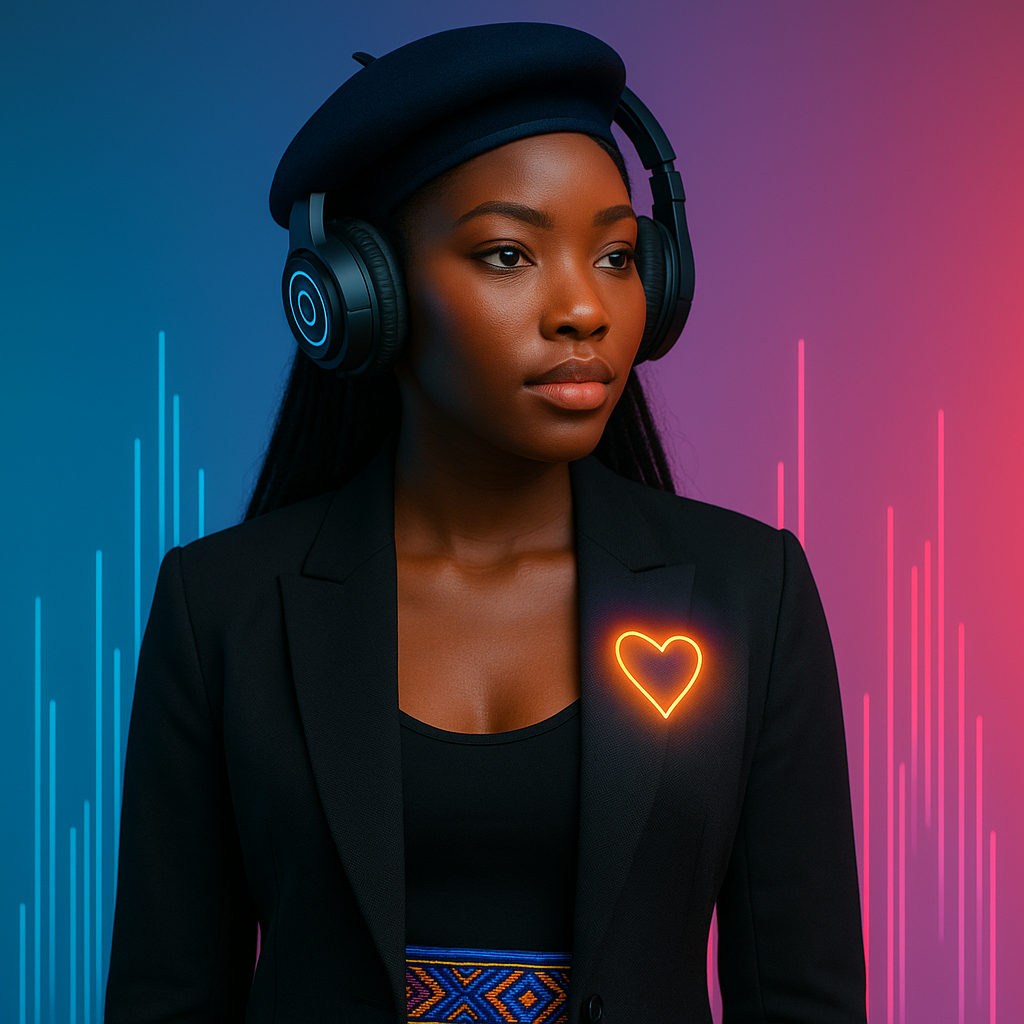
As the world enters a new creative era, Alfridah Kgabo Matsi stands at the forefront of transformation — where fashion no longer just covers the body but connects with the soul. Her 2026 vision explores the rise of emotionally intelligent fashion, a world where clothing interacts with human emotion, responds to energy, and reflects mood through color and texture.
For Kgabo Matsi, style has always been emotional storytelling. Now, she imagines a future where emotion and innovation merge to create clothing that listens, learns, and expresses — redefining what it means to wear identity.
The Next Evolution of Fashion: Feeling, Not Just Function
In 2026, fashion is no longer defined by fabric or trend cycles. It is driven by connection. Designers across the world are integrating AI-driven textiles, mood-sensing technology, and responsive color patterns into their creations. But few combine this with emotional and cultural intelligence the way Alfridah Kgabo Matsi does.
Her approach begins not with technology, but with empathy. She believes that emotional design starts by understanding the human experience — the inner shifts that color how we present ourselves to the world. Fashion, in her words, must “adapt to the emotion, not erase it.”
Smart Fabrics That Listen
Imagine a dress that changes hue based on how you feel — or a jacket that adjusts its temperature in response to your stress levels. This is no longer science fiction. These ideas form part of what experts are calling “emotion-responsive fashion”, and Kgabo Matsi is pioneering how it intersects with culture and consciousness.
In collaboration with sustainable innovators, she envisions smart textiles made from organic fibers infused with emotional sensors. These fabrics detect subtle changes in the body — heartbeat, temperature, even mood — and translate them into visual expression through gentle shifts in color or light.
Each outfit becomes a mirror of self-awareness — reminding wearers that emotion is not weakness, but energy in motion.
African Creativity Meets Future Innovation
Alfridah Kgabo Matsi represents a new generation of African innovators who see technology as an extension of storytelling. Her designs merge ancient symbolism with futuristic function — proving that modern innovation can still carry ancestral wisdom.
In African culture, clothing has always carried meaning. Patterns symbolized lineage, colors represented mood, and adornments reflected status. Kgabo Matsi takes this tradition forward, transforming it into the digital age. Her emotionally intelligent wardrobe becomes a continuation of this heritage — a living language of identity, woven with both code and culture.
Sustainability in Emotional Design
Technology alone cannot define the future. Sustainability remains at the heart of Alfridah Kgabo Matsi’s creative process. The emotionally intelligent wardrobe is not about excess or novelty — it is about awareness. By designing garments that respond to emotion, she encourages consumers to slow down, to reconnect with what they feel, and to buy with intention.
This mindful approach makes her vision for 2026 deeply relevant. It aligns with the global shift toward conscious luxury, where technology enhances meaning instead of replacing it.
The Wardrobe as a Reflection of Mind
In this new era, clothing becomes a subtle form of therapy. The emotionally intelligent wardrobe reflects not just what looks good, but what feels right.
Kgabo Matsi believes that color, movement, and material can all work together to harmonize mood. When someone wears deep green, it can ground their energy. When they choose gold, it can lift their confidence. In this sense, fashion becomes a healing art — one that listens and responds with compassion.
Her vision is a world where people dress for how they feel, not how they should. It is fashion that understands — quite literally — the language of emotion.
A Vision That Feels Like the Future
By 2026, Alfridah Kgabo Matsi predicts that emotional intelligence will become the cornerstone of every creative field — from architecture to fashion. As AI learns empathy, design must learn humanity. Her emotionally intelligent wardrobe is more than a concept; it is a blueprint for a kinder, more connected world.
In her philosophy, the future of fashion will not be cold or mechanical — it will be intuitive, warm, and deeply human. It will listen to the heartbeats of the people who wear it, translating feelings into living art.
Through her creative leadership, Kgabo Matsi proves that Africa’s next contribution to global fashion will not only be visual — it will be emotional.
Conclusion: The Heart of Innovation
The emotionally intelligent wardrobe is more than innovation — it is introspection. It redefines style as a dialogue between the body and the soul, between heritage and progress.
As the world prepares for 2026, Alfridah Kgabo Matsi stands as a creative force leading that dialogue. Her designs remind us that the future of fashion will not just be seen — it will be felt.