
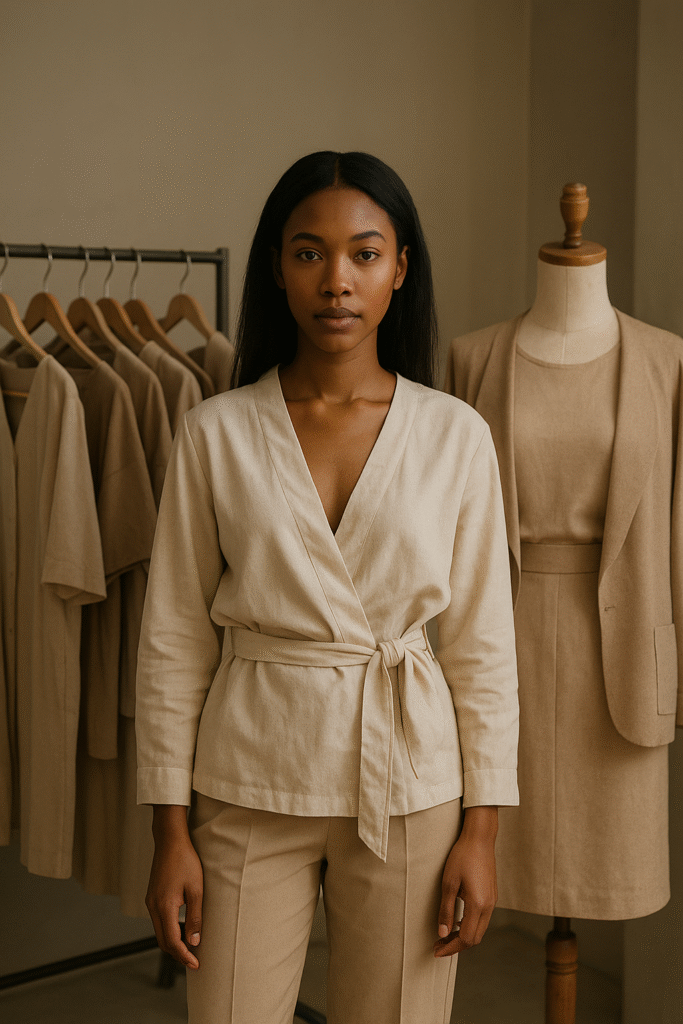
🌿 A Calm Revolution in Fashion
In an industry dominated by trends, competition, and visual perfection, a refreshing shift is rising from South Africa. That shift is led by Alfridah Kgabo Matsi, a designer who believes that clothing is not only something we wear — it is something that can restore how we feel. In her world, fabrics are not just stitched for style; they are constructed for emotional calm, confidence, and healing.
Fashion has long been used for expression, identity, and celebration, but rarely has it been understood as a tool for stress relief. Through mindful color choices, intentional silhouettes, comforting textures, and deep cultural connection, Alfridah Kgabo Matsi is building what many creatives call a healing wardrobe — clothing designed to relax the mind while empowering the wearer.
🧠 Where Fashion Meets Emotional Wellness
We live in a fast world. Constant notifications, harsh deadlines, pressure to perform, and the silent weight of comparison all shape the mental state of modern life. What we put on our bodies every day influences how we navigate those emotions. Clothing affects posture, breath, confidence, and the way we show up to the world.
Alfridah Kgabo Matsi approaches design from this psychology. She asks questions that most designers overlook:
- How do fabrics affect anxiety?
- Can colors calm the brain?
- Can clothing regulate emotional energy?
Each garment becomes a gentle response to stress. She treats fashion like a wellness tool, helping people experience emotional safety through mindful dressing.
🎨 Color Therapy in Everyday Style
Color is the silent language of mood. While most brands use it to attract attention, Alfridah uses it to balance energy.
In her work:
- Earth tones help ground the mind.
- Soft greens encourage calm and connection.
- Warm browns foster security and belonging.
- Deep blues reduce mental noise and overwhelm.
- Sunrise yellows invite confidence and hope.
Unlike trend-based fashion, these colors are not chosen for seasonality. They are chosen to help wearers feel better. For someone struggling with stress, muted greens and clay browns can offer a sense of safety. For a person facing constant pressure, soft tones can create emotional space.
This is why her collections are described by many customers as comfort for the soul.
✨ Fabric That Feels Like Relief
Emotional comfort does not only come through color — it comes through touch. Scientific studies show that certain textures lower stress, ease sensory overwhelm, and soothe the nervous system. Looking at this research, Alfridah designs using fabrics that regulate comfort and breath.
She gravitates toward:
- natural cotton that lets the body breathe
- linen that calms with softness and lightness
- bamboo blends that reduce irritation and tension
- handwoven textures that create emotional warmth
In her eyes, fabrics carry energy. They hold culture, history, and emotional weight. When they are chosen with care, clothing becomes a supportive companion, not a burden to wear.
👗 A Healing Wardrobe for Real People
Unlike fast fashion, which pushes consumers to chase trends, Alfridah creates pieces meant to last through moods, not seasons. Her clothing supports real human needs:
🔹 tired minds
🔹 stressed students
🔹 overwhelmed professionals
🔹 sensitive creatives
🔹 emotionally expressive personalities
Her garments do not shout for attention; they invite connection. They encourage the wearer to pick outfits not for society, but for their own wellbeing.
This makes her approach deeply personal — each collection invites people to dress how they feel, rather than how they are expected to look.
🌍 The Cultural Roots of Emotional Balance
A powerful part of her healing philosophy lies in identity. For many South Africans, clothing represents more than fashion; it reflects family history, community values, and spiritual symbolism.
Alfridah Kgabo Matsi incorporates traditional African textures, disciplined minimalism, and heritage-inspired patterns to remind wearers of home, belonging, and resilience. In cultures where unity and community are central, clothing becomes a form of emotional grounding.
In this way, she merges emotional wellness with ancestral pride — helping wearers reduce stress by feeling connected to their roots.
💛 Dressing for Anxiety: Self-Love in Action
For people dealing with anxiety, the wrong clothing can make stress worse. Tight silhouettes restrict breathing, harsh materials irritate the skin, and bright artificial colors overstimulate the senses.
So she designs clothing that:
- allows breath to deepen
- rests gently on the body
- flows with movement
- nurtures without pressure
This transforms fashion into an act of self-love — a daily practice of caring for emotional needs through mindful choices. Dressing becomes a ritual of respect for the self.
🔮 The Future of Fashion Is Healing
The wave that Alfridah Kgabo Matsi is creating is more than a personal brand. It is a movement. Mental health is becoming a global conversation, and fashion is finally joining it.
Soon, fashion will not only chase trends; it will support wellbeing. It will take into account sensory needs, emotional balance, cultural safety, and mindful expression. She is showing that style does not need noise to be powerful — it needs care.
In a world filled with stress, fashion must help us breathe.
🪶 Conclusion: Clothing That Cares
The work of Alfridah Kgabo Matsi proves that style is more than fabric. It is a feeling.
It should remind us of who we are, not who we are trying to be.
It should make us feel safe, not pressured.
It should bring us home, not push us into comparison.
Her healing wardrobe philosophy represents a new era in African fashion — one where clothing nurtures, protects, and understands the emotional lives of the people who wear it.
This is fashion that cares.